
coating thicknesses controlled in circuit board assembly services
Circuit board assembly services represent a pivotal stage in the manufacturing process of electronic devices. At its core, this service involves the meticulous assembly of electronic components onto a printed circuit board (PCB) to create functional electronic systems. This intricate process demands precision, expertise, and adherence to industry standards to ensure the reliability, performance, and quality of the final product.
The process of circuit board assembly services begins with the fabrication of the PCB itself. PCB fabrication involves translating the design specifications into a physical board using specialized equipment and techniques. The layout of the PCB determines the arrangement of components and the pathways for electrical connections, laying the foundation for the assembly process.
Once the PCBs are fabricated, the assembly of electronic components commences. This assembly process typically involves two primary methods: through-hole assembly and surface-mount assembly. Through-hole assembly entails mounting components by inserting their leads into pre-drilled holes on the PCB and soldering them to pads on the opposite side. In contrast, surface-mount assembly involves mounting components directly onto the surface of the PCB and soldering them in place.
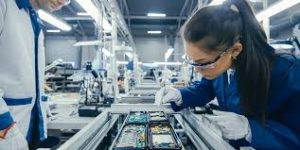
How are conformal coating thicknesses controlled in circuit board assembly services?
In recent years, surface-mount assembly has gained popularity due to its ability to accommodate smaller components and higher component densities, leading to more compact and lightweight electronic devices. However, through-hole assembly is still utilized for certain applications where robustness and reliability are paramount, as it provides stronger mechanical connections.
The assembly process relies on specialized equipment such as pick-and-place machines, soldering irons, and reflow ovens to automate the placement and soldering of components onto the PCB. These machines ensure consistency, accuracy, and efficiency throughout the assembly process, minimizing errors and optimizing production throughput.
Quality control is a critical aspect of circuit board assembly services. Manufacturers employ various techniques such as automated optical inspection (AOI) and X-ray inspection to detect defects such as misaligned components, solder bridges, and solder joint issues. These inspections are essential for ensuring that the assembled PCBs meet the required quality standards and performance specifications.
Choosing a reliable circuit board assembly service provider is paramount for the success of any electronic project. When selecting a provider, it is essential to consider factors such as experience, expertise, production capacity, turnaround time, and cost. A reputable manufacturer with a proven track record of delivering high-quality assembly services and meeting specific project requirements is crucial for achieving desired outcomes.
Moreover, adherence to industry standards is fundamental when selecting a circuit board assembly service provider. Compliance with standards such as the International Organization for Standardization (ISO), Restriction of Hazardous Substances (RoHS), and IPC-A-610 ensures that the assembled PCBs meet regulatory requirements, safety standards, and industry best practices.
In conclusion, circuit board assembly services represent a critical stage in the manufacturing process of electronic devices. From PCB fabrication to component assembly and quality control, each step requires meticulous attention to detail and adherence to industry standards. By understanding the intricacies of circuit board assembly services and partnering with reputable service providers, manufacturers can ensure the production of reliable, high-performance electronic systems that meet the demands of today’s market.


